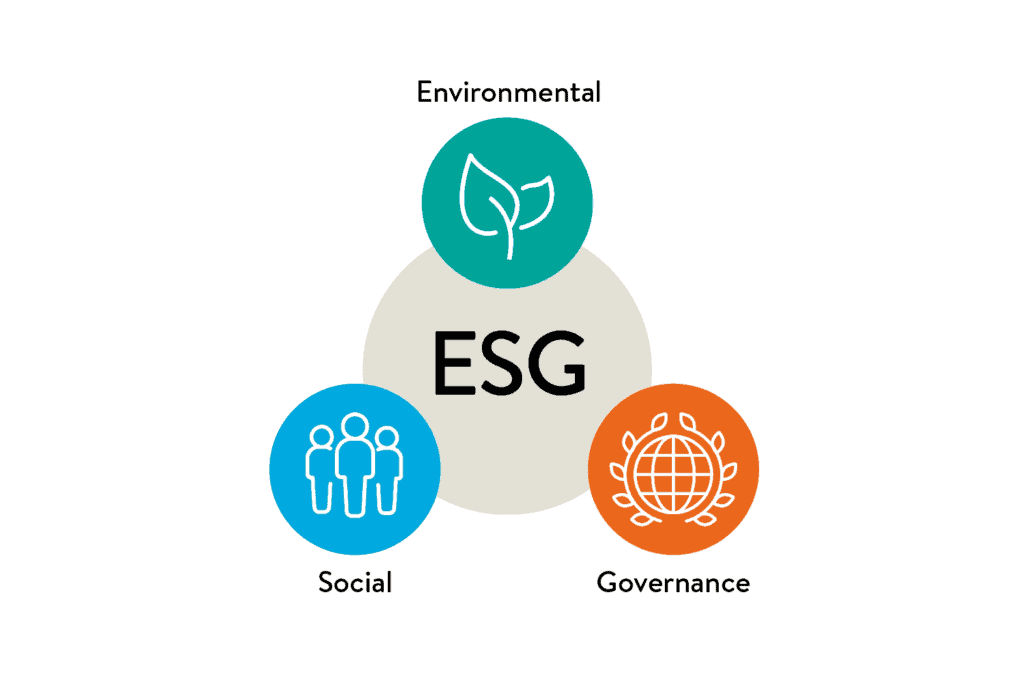
Environmental, Social, and Governance (ESG) is no longer a peripheral topic. It has become a management, financing, and governance issue that directly affects how companies are assessed by investors, regulators, lenders, customers, and other stakeholders. In the Jordanian context, the available evidence shows that ESG is increasingly linked to risk management, disclosure quality, reputation, competitiveness, and financial performance. The Central Bank of Jordan’s Green Finance Strategy 2023–2028, the 2022 Sustainability study on Jordanian listed firms, the 2025 Banks and Bank Systems study on Jordanian banks, and the 2025 Journal of Cultural Analysis and Social Change study on Jordanian SMEs all point in the same direction: ESG has moved from broad sustainability language into the domain of practical governance and business performance.
The Jordan Market Context for ESG
Jordan’s ESG landscape is developing, but the direction is clear. The 2022 study on listed firms states that disclosure practices in Jordan are still emerging and are voluntary, and that while the level of ESG information disclosure is weak, progress is being made in response to shareholder pressures. This means ESG maturity is uneven across sectors and companies. Some firms are already integrating ESG into governance and disclosure. Others are still at the early stage, where ESG appears mainly in narrative form rather than in operational systems.
The financial sector provides the clearest institutional signal. The Central Bank of Jordan Green Finance Strategy 2023–2028 establishes a structured roadmap to strengthen capacity and governance, enhance resilience to climate-related and environmental risks, and increase the mobilization of green finance. The strategy also states that, in the medium term, the Central Bank intends to broaden the strategy into a wider sustainable finance approach covering the full range of environmental, social, and governance factors and plans to align supervisory guidance with that expanded scope. This is a significant development for the market because it shows ESG is being treated as an institutional and supervisory topic, not only as a corporate communications theme.
The Environmental Dimension
The environmental pillar is the most visible part of ESG in many industries because it intersects directly with climate risk, operating efficiency, resource use, and financing opportunities. In Jordan’s financial sector, the Central Bank’s 2021 banking survey found that 76 percent of respondent banks believed borrowers would be affected by climate transition risks. It also found that key physical risks cited in Jordan included drought, floods, and chronic water shortage. These are not abstract concerns. They affect credit quality, business continuity, sector exposure, and long-term asset values.
The same survey shows how early the market still is. Only 29 percent of banks reported integrating climate change and environmental risks within their risk management framework, only 12 percent believed these risks should be considered in internal capital adequacy assessment, and only 18 percent were conducting stress tests related to climate and environmental risks. At the same time, 88 percent had made their own operations more climate friendly, 65 percentalready had products supporting sustainable development, and 76 percent supported green bond issuance in Jordan. This combination of weak risk integration and growing product interest is commercially important. It shows that environmental ESG activity in Jordan is progressing faster in selected operational and financing areas than in risk architecture and formal governance.
The Social Dimension
The social pillar of ESG is often treated too narrowly, but the evidence suggests it should be understood as part of enterprise legitimacy and operating resilience. The 2025 Jordanian SME study describes ESG engagement as supporting social trust and stronger stakeholder relationships, with corporate reputation playing a significant mediating role between ESG engagement and firm performance. It found that ESG engagement significantly improves SME performance both directly and indirectly through improved reputation, while CEO ethical leadership did not show a statistically significant moderating effect in that relationship.
That finding matters for consultancy work because it shifts attention from slogans to systems. It suggests that social performance is strengthened less by symbolic leadership language and more by credible organizational practices that stakeholders can observe. In practical terms, the social pillar includes workforce standards, safety, inclusion, employee stability, stakeholder engagement, and community-related practices. In emerging markets and resource-constrained environments, these factors influence whether firms build durable trust with customers, employees, regulators, and local communities. The Jordanian SME study also frames ESG as a resource that must be structured and leveraged effectively to create value, especially in constrained contexts.
The Governance Dimension
The governance pillar is the backbone of ESG because it determines whether environmental and social commitments are governed properly or remain only declarative. The 2022 Jordanian listed firms study found that governance information disclosure was associated with increased intellectual capital efficiency, especially through the human capital efficiency (HCE) and relational capital efficiency (RCE) components. It also found that environmental disclosure was not associated with overall IC efficiency, while social disclosure showed a negative association with some IC efficiency components, specifically structural and relational capital efficiency. That evidence is important because it shows the three ESG pillars do not produce identical effects. Governance, in particular, appears to be especially important in strengthening institutional quality and intangible value.
In the banking literature, governance also appears in a more structured form. The 2025 Jordanian bank study defines the bank ESG score as an overall score based on self-reported environmental, social, and governance information, and it separately tracks the presence of an ESG committee as a control variable. The study found that the presence of an ESG committee did not affect bank performance in its model. That does not mean governance is unimportant. It means committee existence alone is not enough. Governance quality depends on how ESG is embedded in decision-making, disclosure, risk oversight, control systems, and board supervision.
ESG Disclosure, Reporting, and Decision-Making
Disclosure remains one of the clearest visible expressions of ESG maturity. The 2022 Jordanian listed firms study argues that ESG disclosure can reduce information asymmetry, improve transparency, attract investors, and strengthen the value of intangible assets. It also recommends stronger sustainability reporting frameworks, broader board oversight of sustainability issues, and third-party sustainability audits to improve credibility and attract capital.
Jordan’s financial sector evidence shows why disclosure is still a development priority. The Central Bank of Jordan reports that no surveyed banks were disclosing information about climate-related financial risks, and only 29 percent disclosed activities related to green finance. Banks cited lack of data, lack of information, and lack of disclosure requirements as major impediments. For consulting purposes, this is a critical finding. It shows that many organizations do not need only report drafting. They need data structures, governance ownership, definitions, and internal reporting mechanisms capable of producing reliable ESG disclosures.
What the Evidence Shows in Jordan
The strongest sector-specific performance evidence in the uploaded sources comes from banking and SMEs. The 2025 Banks and Bank Systems study analyzed a balanced panel of 15 Jordanian listed banks from 2009 to 2023 and found that higher ESG scores were associated with better operating and market performance. Specifically, the fixed-effects model showed that a one-point increase in ESG score corresponded to a 0.496 increase in ROA and a 0.370 increase in Tobin’s Q. The study also reported that the ESG committee variable was not significant in explaining performance.
The SME evidence supports the broader business case. The 2025 Jordanian SME study found that ESG engagement significantly boosts firm performance directly and indirectly through corporate reputation. The listed-firm disclosure evidence adds another layer by showing that ESG disclosure can influence intellectual capital efficiency, but the effects differ by pillar. Governance disclosure was associated with positive efficiency effects, social disclosure showed negative associations in some components, and environmental disclosure was neutral at the overall IC level while still helping some subcomponents. Taken together, the Jordanian evidence does not support a simplistic claim that “more ESG automatically means better results.” It supports a narrower, more defensible conclusion: ESG can improve performance, reputation, and intangible value when it is embedded credibly, disclosed properly, and supported by governance.
What Effective ESG Implementation Looks Like
For companies, effective ESG implementation begins with materiality and governance, not with publication design. The first task is to determine which environmental, social, and governance issues are material to the business model, sector exposure, ownership structure, financing needs, and stakeholder profile. From there, the company needs board and management ownership, defined decision rights, clear policies, internal controls, and measurable indicators. In sectors with financing or regulatory exposure, ESG should also be connected to risk management, credit policy, supplier standards, and disclosure controls.
Jordan’s financial-sector evidence shows why sequencing matters. The Central Bank’s strategy is built around foundational capacity, governance arrangements, data development, risk identification, supervisory guidance, and then broader green finance mobilization. It also notes that green finance in Jordan’s banking sector was estimated at about 3.1 percent of bank loan portfolios, with a non-binding expectation of a 30 percent increase in green finance volume by the end of 2028. That is the right way to think about ESG implementation in companies as well. First build governance and data. Then improve risk frameworks and disclosures. Then expand into products, financing, and strategic positioning. Organizations that reverse the sequence usually produce weak reports and limited institutional change.
What ESG Means in a Business Context
In practice, ESG is a multidimensional business framework. The environmental pillar deals with the company’s interaction with natural resources, emissions, waste, energy use, and climate-related exposures. The social pillar addresses workforce practices, inclusion, safety, stakeholder relations, and broader societal impact. The governance pillar addresses ownership structures, boards, internal controls, accountability, oversight, and disclosure quality. The 2022 Jordanian listed firms study notes that ESG information signals a firm’s commitments toward welfare, social, and environmental issues and can strengthen the connection between stakeholder and societal interests. It further states that ESG disclosure may enhance reputation and increase the value of intangible assets through intellectual capital efficiency.
That point matters because ESG is often misunderstood as a reporting label rather than a management system. When handled properly, ESG affects daily business choices. In the banking sector, for example, the 2025 Jordanian bank study explains that Bloomberg’s ESG score for banks incorporates industry-adjusted indicators, including total greenhouse gas emissions, paper consumption, total waste, and energy consumption, among other factors. That is a reminder that ESG is measurable. It is not limited to values statements. It is expressed through indicators, policies, oversight structures, and the quality of implementation.
Why ESG Has Become a Core Management and Investor Issue
The business case for ESG is increasingly linked to performance, resilience, and trust. The 2022 Jordanian listed firms study states that previous research has documented positive links between ESG information disclosure and financial performance, risk-adjusted returns, firm value, lower cost of equity, narrower bond spreads, and lower default risk. In the Jordanian SME literature, ESG is presented as a strategic intangible asset that can improve legitimacy, stakeholder trust, and long-term performance when it is properly structured and leveraged.
This is why ESG has become a boardroom issue rather than a communications issue. Investors and lenders increasingly care about the reliability of non-financial information, the company’s exposure to climate-related and social risks, and the strength of its governance. In the Jordanian banking sector, ESG is now being discussed not only through performance lenses but also through prudential and supervisory lenses. The Central Bank of Jordan states that climate-related and environmental risks can threaten the soundness and safety of financial institutions and the stability of the broader financial system. Its strategy therefore aims to guide financial institutions in integrating climate-responsive and environmental considerations into corporate governance structures, risk management, internal controls, disclosure, reporting, and green financing.
Conclusion
ESG should be presented on a consultancy website as a structured business framework, not as a trend label. The evidence from Jordan shows that ESG intersects with risk management, green finance, disclosure quality, institutional credibility, reputation, and measurable business outcomes. The Central Bank of Jordan has already moved the market toward a more formal sustainability and green-finance agenda, especially in the banking sector. The 2025 Jordanian bank study found a positive relationship between ESG scores and both operating and market performance, while the Jordanian SME study found that ESG improves firm performance directly and through reputation. The 2022 listed-firm study adds that governance disclosure is particularly relevant to intellectual capital efficiency.